
Table of Contents
Elastic Email Case Study: WHMCS Services Success Story
We continue to present you with our customers’ success stories about how they use Elastic Email to handle email communication easily and successfully. This time, we asked WHMCS Services, a leading development company creating custom WHMCS modules, about their experience with Elastic Email, how they use the platform, and what features they find most useful in their email communication.
Table of Contents
WHMCS Services - a leading custom WHMCS modules development company
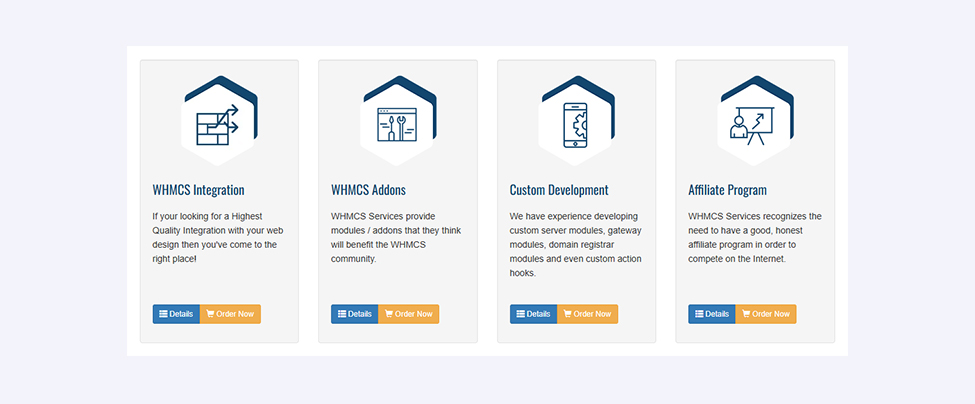
WHMCS Services is an organization specializing in the WHMCS Complete Solution for creating modules. Available modules regard security, client management, billing, support, and utility. Additionally, WHMCS Services creates and sells custom modules and website integrations for businesses to meet their needs with a secure, reliable, and flexible solution.
WHMCS is an all-in-one automation platform for online businesses, primarily web hosting providers, that manages client management, billing, and support in a centralized system, automating tasks from signup to service automation, including invoicing, payments, domain registration, and account provisioning. It streamlines the entire customer lifecycle, letting businesses automate processes, reduce manual errors, and offer a professional client portal.
Elastic Email as a secure and cost-effective email delivery engine
WHMCS Services sends mainly transactional emails. For example, account creation, invoices, daily transactional data reports to business managers, password resets, system alerts, and, occasionally, client-specific notifications. As Luis, the WHMCS Services Chief of Operations, says, at first, he tried to send emails directly from his servers, but they always ended up in the spam folder. That was the moment when he decided he needed an email platform.
At that moment, he started to search online for an email service provider. Among other solutions, he discovered Elastic Email. The platform proved to be cost-effective and offered a referral program. These reasons convinced Luis to choose Elastic Email, and he’s been using the platform ever since. The referral program was particularly useful for WHMCS Services as they built a module with Elastic Email. It allowed their customers to connect their WHMCS website with the Elastic Email API to send emails. Using the Elastic Email referral program, Luis earns money by sharing the affiliate link. Basically, each time his customers start using Elastic Email to send their emails, he receives 20% of all their purchases for up to six months.
When I was using my service email I noticed people complaining: I'm not getting the emails. I'm not getting this. Then that's ok, you know what? Forget about this. Let's just try to find an email provider. And I found you. - Luis, the WHMCS Services Chief of Operations
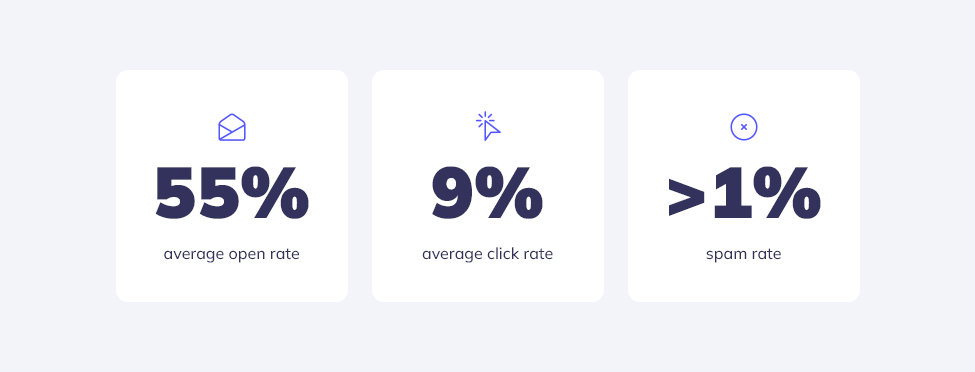
Since switching to Elastic Email for all transactional sending, WHMCS Services has maintained:
- 55% average open rate
- 9% average click rate
- >1% spam rate
Eventually, these figures reflect transactional email performance - a category where deliverability is the primary driver of engagement. High open rates on transactional messages indicate consistent inbox placement rather than spam folder routing, which was the original problem Luis needed to solve.
Main Elastic Email features used by WHMCS Services
When we asked Luis what Elastic Email features he uses mostly, he replied that, apart from the referral program, he uses email logs to look at the email activity. He checks whether all emails were sent and delivered, or maybe there’s an issue he needs to address.
API Libraries
Integrate Elastic Email directly with your software easily and seamlessly, thanks to downloadable API libraries for 12 programming languages and frameworks.
Learn moreEmail Logs
Keep track of your email performance. Check the sending status and engagement of your emails, and delivery insights to monitor any issues and take timely action.
Learn moreReferral Program
Earn money through the Elastic Email referral program. Recommend the service to your friends and business partners and receive 20% of all their purchases for up to six months.
Learn moreWHMCS Services’ success story - conclusion
Like thousands of other brands, WHMCS Services uses the Elastic Email API product to send its transactional emails. They do it with ease and successfully, without having to worry about whether their essential communication hit the recipients’ inboxes. WHMCS Services took it to the next level by creating a WHMCS module with Elastic Email. An,d by using the referral program to earn money thanks to recommending Elastic Email to its customers. If you want to read more success stories of our customers, check out the case study category of our blog.
Enjoying this Content?
You can receive articles like this straight to your inbox.
Sign up for our newsletter and get a dose of email marketing knowledge every month!
FAQ
If you like this article, share it with friends:


Ula Chwesiuk
Ula is a content creator at Elastic Email. She is passionate about marketing, creative writing and language learning. Outside of work, Ula likes to travel, try new recipes and go to concerts.



Eager to put this knowledge to some use?
Try one of our products!


