Table of Contents
Holiday Email Marketing for E-commerce
The holiday season isn’t just a busy period. It’s the golden window for e-commerce businesses to boost sales and build lasting customer relationships. For many brands, Q4 dictates the profitability of the entire year, so it's natural that everybody wants to make the best out of this season. But how should you do it? With consumers bombarded by countless offers in social media ads and paid search, email marketing remains one of the most effective tools to cut through the noise and deliver personalized, timely messages that drive action.
Table of Contents
Why does email perform so exceptionally well during the holidays? Your subscribers have already raised their hands, and they want to hear from you. They're actively looking for gift ideas, deals, and shopping inspiration. Unlike cold advertising, your emails land in the inboxes of people who are primed to buy. This guide will walk you through everything you need to know about holiday email marketing for e-commerce to maximize engagement and conversions.
TL;DR - holiday email marketing at a glance
- Start planning 3-4 months before your first promotion.
- Build your calendar around key dates (early bird teasers, Black Friday, Cyber Monday, Green Monday, Free Shipping Day, last-minute shopping window, and post-Christmas follow-ups).
- Segment your list, run 7 core campaign types (early bird, gift guides, flash sales, abandoned cart recovery, last-minute shopper, shipping deadlines, post-holiday follow-ups), and increase send frequency to 2-3 emails/week in November-December without pushing unsubscribes above 0.5%.
- Track revenue per email sent as your primary success metric.
Planning your holiday email marketing strategy
The biggest mistake e-commerce brands make is starting too late. Your holiday email planning should begin at least 3-4 months before your first major promotional date. This gives you time to build your list, create content, design templates, and test your campaigns thoroughly.
Key shopping dates to target
- Early November - teaser campaigns and early bird offers
- Black Friday - the biggest shopping day for many retailers
- Cyber Monday - peak online shopping day
- Green Monday - second Monday in December, last major push before shipping deadlines
- Free Shipping Day - typically mid-December
- Last-minute Shopping Window - usually 3-5 days before Christmas
- Post-Christmas/New Year - gift card redemption, exchanges, and Year-end/January clearance sale and New Year resolutions
Create a promotional calendar that maps out every email you’ll send during this period. Include send dates, audience segment, offers, and goals for each campaign. This calendar will become your roadmap and keep your entire team aligned.
Setting email campaign goals and KPIs
When planning your holiday email campaigns, you should start by setting clear goals. First, decide what you want from your holiday emails - whether it’s driving sales, increasing engagement with your brand, or growing your subscriber list for long-term value. If it’s driving sales, don’t just set your goal to “make money”. For instance, think of what percentage increase over last year you’re aiming for. If it’s engagement, track open rates (aim for 20-30%), click-through rates (2-5%), and conversion rates (1-3% or higher depending on your industry). More importantly, track revenue per email sent to know your return on investment (ROI). If your goal is to grow your list, plan to grow it by 20-40% during the pre-holiday period. New subscribers acquired in October and November become valuable customers during peak shopping days.
Building and segmenting your email list
A larger list means more opportunities, but quality matters most. Offer compelling reasons to join your list now. Use lead magnets such as exclusive holiday discounts or festive content to grow your email list ahead of peak shopping season. Consider using delayed or exit-intent pop-ups on your highest-traffic pages. Remember to clean your existing lists regularly. Begin by removing subscribers who haven’t opened or clicked your emails in 6-12 months or sending a reengagement campaign. It boosts deliverability and increases overall engagement.
Once you’ve built and cleaned your list, segmentation becomes critical. Not all subscribers should receive the same emails. Segment your list to deliver more relevant and higher-converting campaigns. Divide subscribers into meaningful groups, for example, based on past purchase behavior. Create a segment with customers who bought something last year during the sales season. Another segment can include those who abandoned their carts or browsed your website without making a purchase. And don’t forget about your VIPs, meaning your high-value customers. These are the subscribers who deserve exclusive early access to deals, rewarding their loyalty and guaranteeing initial sales volume.
Types of holiday email marketing campaigns
Here are some email campaign examples you can use in your holiday email marketing strategy:
Early bird & preview campaigns
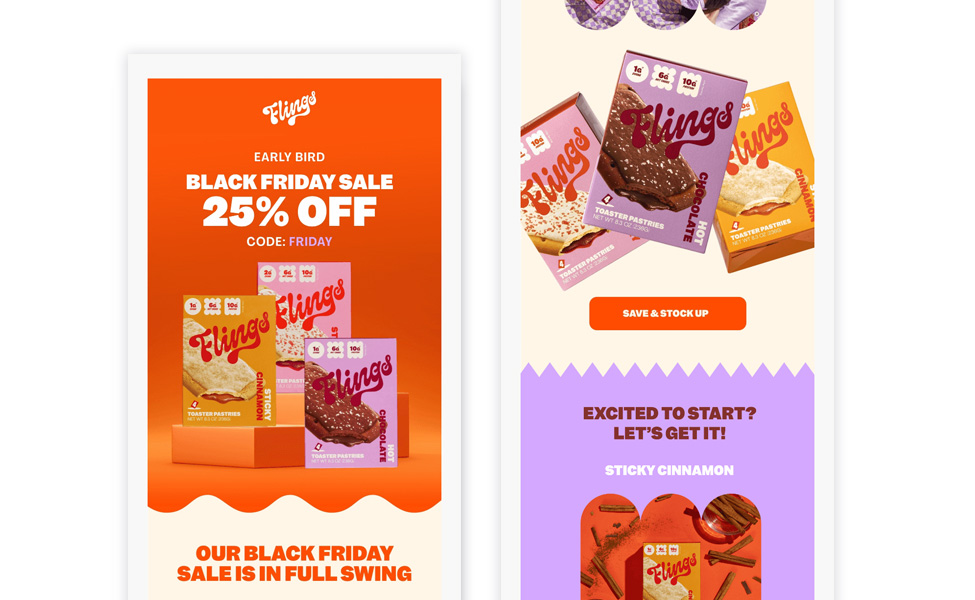
Send a “sneak peek” email showing what’s coming for Black Friday. Build anticipation with countdown timers and exclusive previews for subscribers. It primes your audience and ensures they’re waiting for your emails when the big sales hit.
Gift guide emails
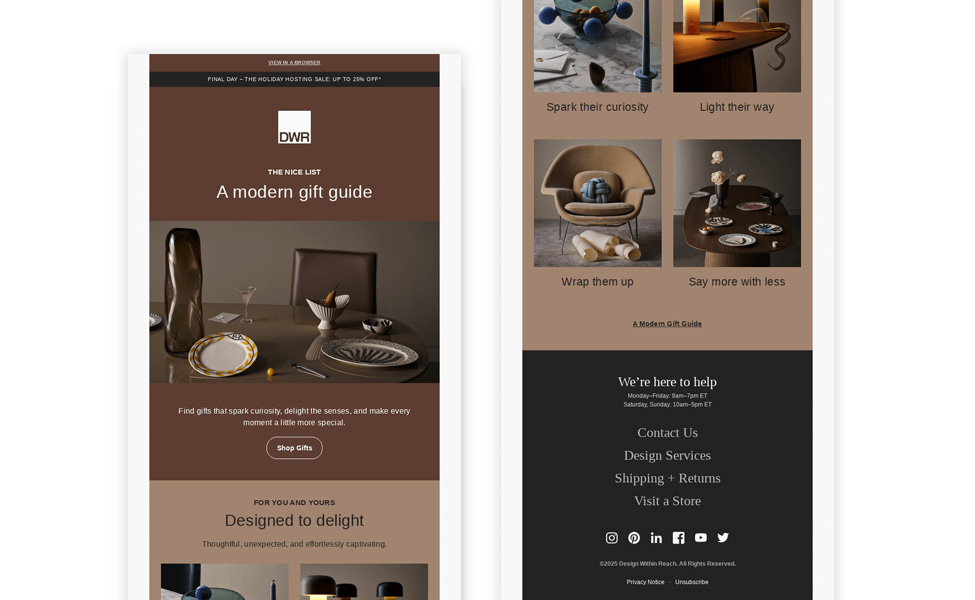
Gift guides are content marketing gold during the holidays. When you create curated collections of, e.g., gifts under $50, gifts for her, or gifts for tech lovers, you’re making your subscribers’ lives a lot easier. Such emails provide genuine value while showcasing your products. They’re also highly shareable with friends and family.
Flash sales and limited-time offers
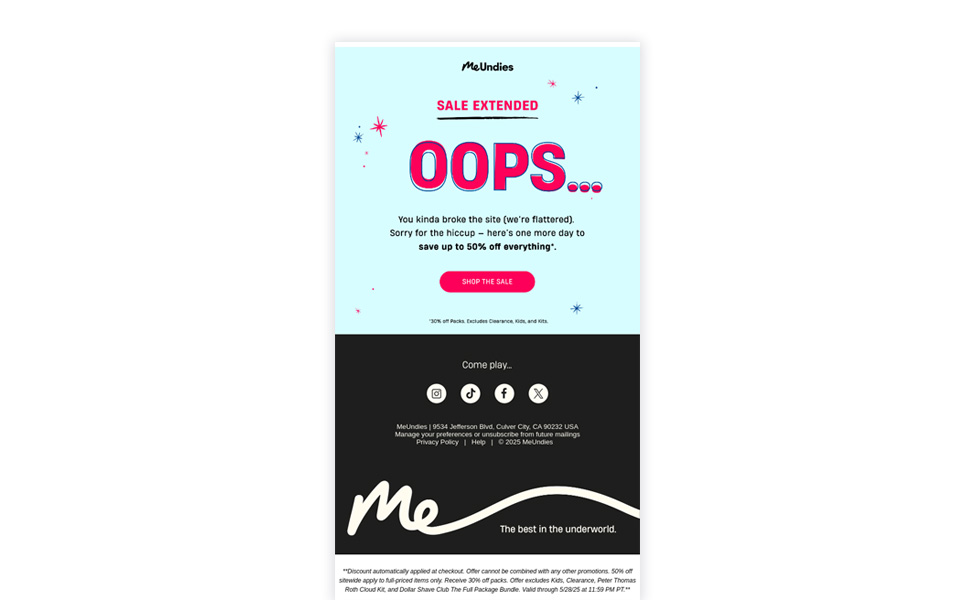
Create urgency with 24-48 hour flash sales. Subject lines like “Tonight Only: Extra 25% Off” or “4-Hour Flash Sale Starts Now” drive immediate action. Use countdown timers in your emails to reinforce scarcity.
Abandoned Cart Recovery
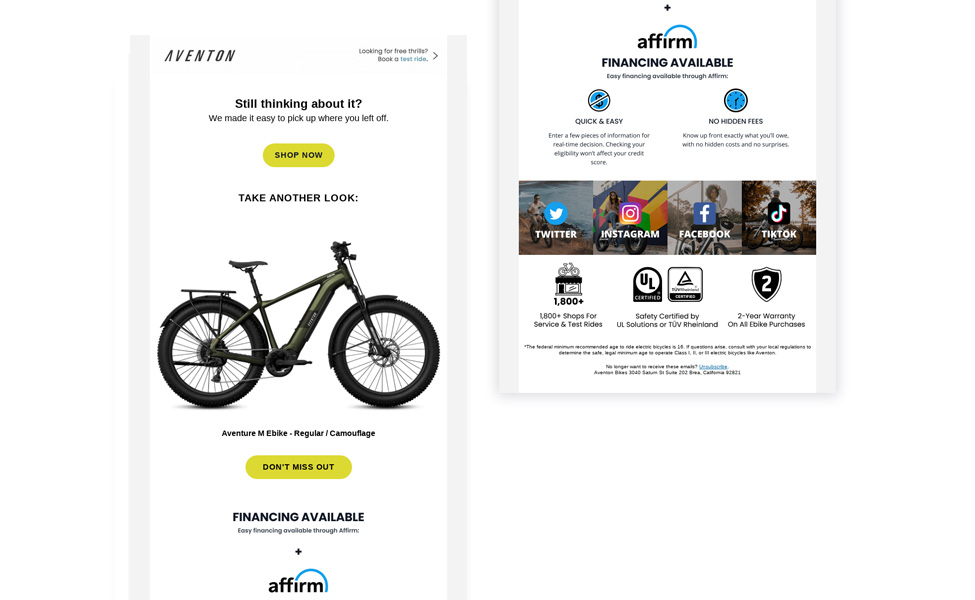
Your abandoned cart rate will spike during the holidays as people often shop by comparing various websites and get distracted. That is why you need a cart recovery sequence. Send the first email within a few hours, a second at 24 hours, and a final at 48-72 hours. Consider offering a small incentive in your last email to close the sale.
Last-minute shopper campaigns
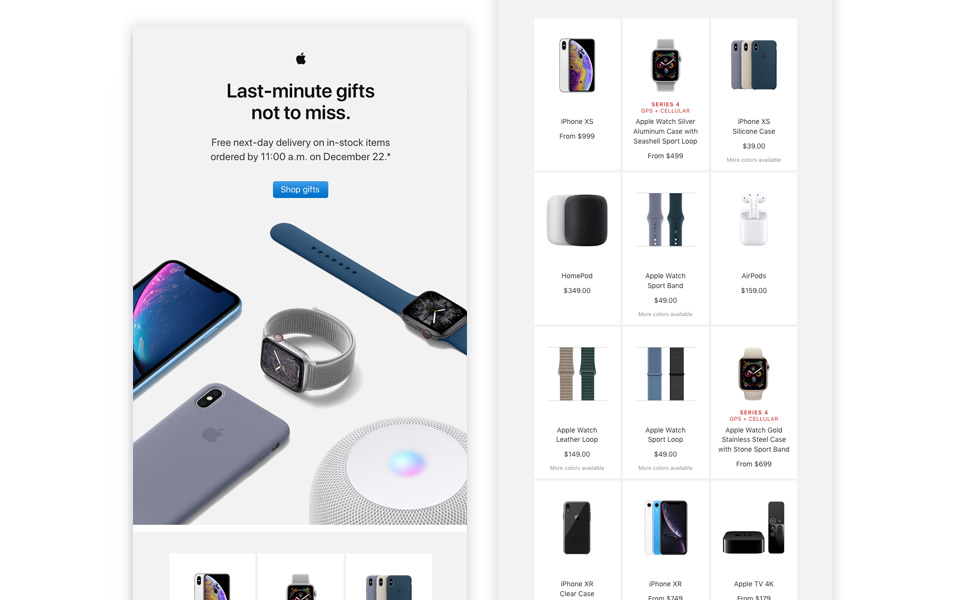
Shoppers leaving their decisions until the last minute are a significant market segment. Starting about a week before Christmas, shift your messaging to “Not too late” campaigns. Highlight products with fast shipping, digital gift cards, and gifts that arrive instantly via email.
Shipping deadline reminders
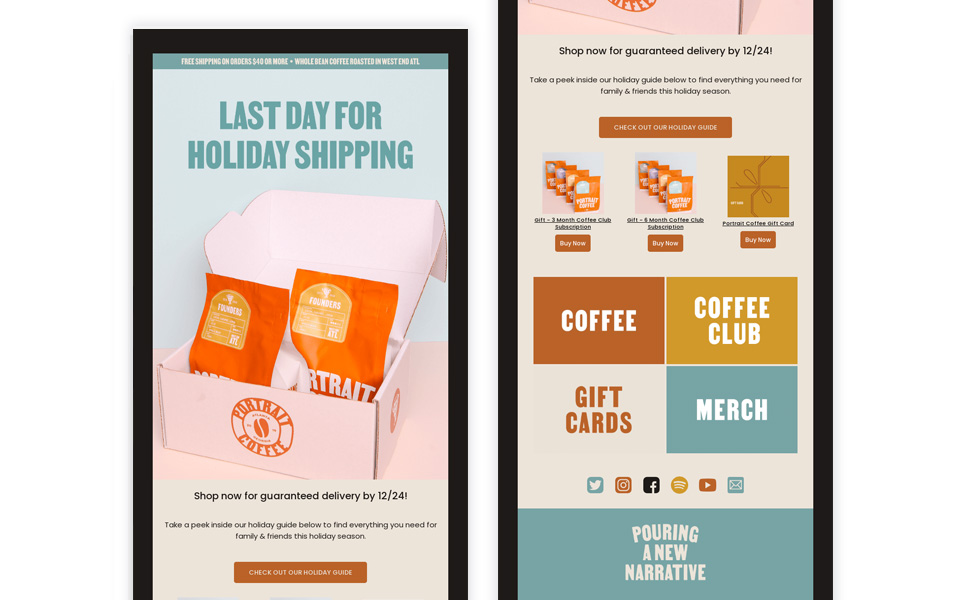
Send clear and prominent emails about your shipping deadlines. It should be a standalone email, not containing your promotions. You can even send a reminder as deadlines approach. Consider offering shipping discounts to push last-minute sales.
Post-holiday follow-ups
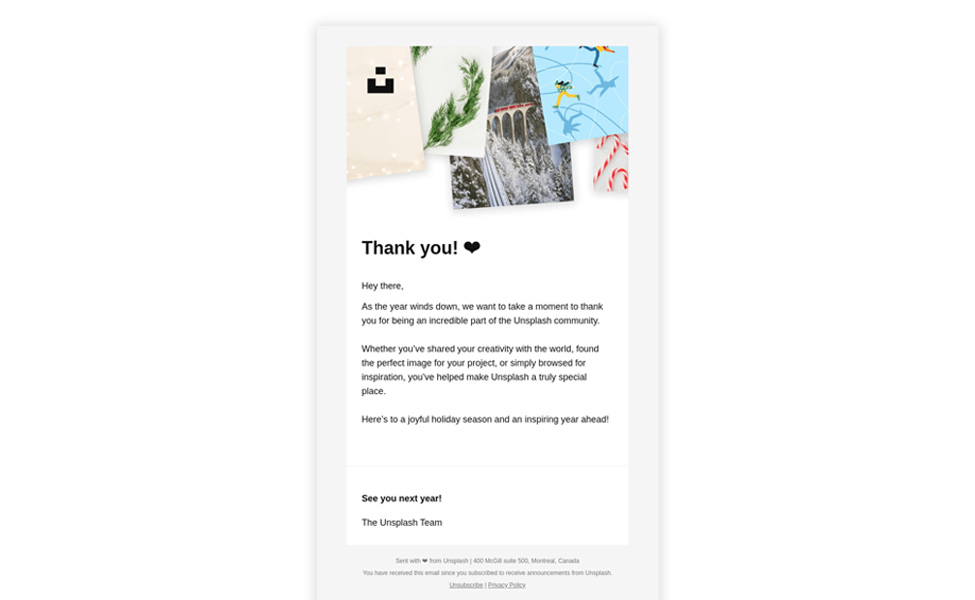
The holidays don’t end on December 25th. Send thank-you emails to buyers, request reviews, promote your exchange and return policy, and remind recipients about gift cards. After Christmas, pivot to year-end and New Year messaging and January sales to capture gift card redemptions and exchange traffic.
Crafting holiday email marketing content
When creating your emails, there are three crucial elements to take care of: subject line, email design, and copy. Let’s discuss each in more detail.
Subject line best practices
Your subject line determines whether your email gets opened. During the holidays, inboxes are flooded, so you need to stand out. Here are some best practices to make sure your subscribers want to open and read your email:
- Create urgency - use time-sensitive language like “Last Chance”, “Final Hours”, or “Only 3 Days Left”, but be honest, as false urgency destroys trust.
- Personalize - go beyond the recipient’s first name and try “Sarah, your cart is waiting”, “John, we saved something special for you”, or even refer to their past purchases like “More items like the jacket you loved”.
- Use emojis - emojis can increase open rate when used strategically, and holiday-appropriate emojis catch the eye. Test if they make any difference in your campaigns, but don’t overuse them (one or two is the maximum).
- Try A/B testing - Test various subject lines on every major campaign. For example, test urgency vs. benefit-driven, personalized vs. generic, emoji vs. no emoji. Small improvements compound over dozens of holiday emails.
Email design elements
Once your recipients decide to open your email, its design should not only be compelling, but everything should appear as you intended. That’s why, here are the aspects to which you should pay special attention:
- Mobile-first design - as the majority of emails are opened on mobile devices, design your layouts for small screens first. Use large, easily tappable buttons (minimum 44x44 pixels), single-column layouts, and large, readable fonts.
- Holiday visuals - add festive elements without overwhelming your design. A subtle holiday banner, seasonal colors, or themed graphics set the mood. But remember to keep your branding consistent, as your subscribers should recognize your emails instantly.
- Clear CTAs - every email needs one primary call-to-action that clearly defines what action you want to obtain from your recipients. Make your buttons large, use contrasting colors that pop, and use action-oriented language, e.g., “Shop the Sale”, “Claim My Discount”, or “Get Early Access”.
- Conversion-focused layouts - put your most important content and CTA above the fold. Use the inverted pyramid structure: headline, benefits, CTA, supporting details. Focus on your primary goal and remove any excessive links that may distract your readers.
Copywriting tips
Now it’s time to move on to your email copy. Wording is key if you want to convince people to take action and buy your products. Here are some tips to consider when writing your email body text:
- Benefit-driven messaging - don’t just list features, but explain their benefits. Instead of saying “free shipping on orders over $50”, say “get your gifts delivered free”.
- Scarcity and urgency - combine time scarcity, like “Sale ends on Monday”, with inventory scarcity such as “Only 12 left in stock”. This psychological trigger drives action, but only uses it truthfully. Creating false scarcity is not only dishonest, but it’s also illegal.
- Personalization beyond name - just like with subject lines, email copy should be personalized on a deeper level. Refer to the recipient's browsing history and write something like: “Still thinking about those boots?”. To evoke conversions, you need to acknowledge your customer’s journey. Remember that segment-specific copy converts better than generic blasts.
Email sending timing and frequency
Optimal send times
While general best practices suggest Tuesday-Thursday at 10 am or 1 pm, your audience is unique. Test different send times through October and analyze your stats to identify your optimal windows before the holiday rush begins. Many email marketing platforms, including Elastic Email, offer send time optimization, in which emails are sent at the most optimal time according to the recipients’ past behavior.
During peak shopping days like Black Friday or Cyber Monday, consider multiple sends: early morning to catch early birds, mid-morning that hit office workers, and evening to reach people when they're at home.
Email frequency balance
You can email more frequently during the holidays, but there should always be a balance. During normal months, you might send 4-8 emails per month. During November and December, you can increase to 2-3 emails per week, ramping up to daily emails during the Black Friday weekend.
Monitor your unsubscribe rate closely. A slight increase is normal and acceptable during high-frequency periods. But if unsubscribes spike above 0.5% per email, pull back and analyze what you may optimize.
Measuring success and post-holiday analysis
To know whether your email campaign was successful, you need to track a few key metrics:
- Revenue metrics - revenue per email sent is your ultimate success metric. If you sent 100,000 emails and generated $50,000 in attributed revenue, that’s $0.50 per email. Track this metric for every email campaign and optimize accordingly.
- Basic engagement metrics - track open rates (the benchmark is 20-30% but may vary depending on the industry), click-through rates (2-5%), and conversion rates (1-3+%). Compare this year’s results with your baseline and last year’s holiday performance.
- Unsubscribe rates - monitor closely your unsubscribe rates during high-frequency periods. Anything below 0.3% per email is healthy. Unsubscribe rate above 0.5% indicates you’re pushing too hard or delivering insufficient value.
Another good practice when it comes to measuring your holiday email marketing success is a post-season review. Take some time in January for a comprehensive review of what worked, what didn’t, which emails generated the most revenue, which segments converted best, and what your overall holiday email marketing ROI was. Document everything and treat it as a reference point next year. Include your best subject lines, top-performing designs, optimal sending times, and lessons learned.
To complement your post-holiday analysis, you can survey your holiday buyers. Ask where they heard about your brand and what motivated their purchase to reveal which emails drove action. This qualitative data will add another dimension to your metrics.
Conclusion
Holiday email marketing is your e-commerce business's single biggest revenue opportunity of the year. The strategies in this guide, such as early planning, list segmentation, diverse campaign types, compelling content, mobile optimization, personalization, and careful measurement, will help you maximize your results. Remember to start early, test often, and focus relentlessly on delivering value to your subscribers. The brands that win during the holidays are those that treat their email list as an asset to nurture, not just a database to blast.
Your subscribers are looking for gift ideas, hunting for deals, and hoping to find the perfect presents. Your job is to show up consistently in their inbox with relevant, timely, valuable emails that help them accomplish their holiday shopping goals. Do that well, and you'll both win.
Enjoying this Content?
You can receive articles like this straight to your inbox.
Sign up for our newsletter and get a dose of email marketing knowledge every month!
FAQ
If you like this article, share it with friends:


Ula Chwesiuk
Ula is a content creator at Elastic Email. She is passionate about marketing, creative writing and language learning. Outside of work, Ula likes to travel, try new recipes and go to concerts.


Eager to put this knowledge to some use?
Try one of our products!


