
Table of Contents
15 Email Marketing Campaign Ideas for Your Newsletter (2026)
Email is one of the most powerful marketing tools available, and the numbers keep proving it. With an average return of $36–$38 for every $1 spent, email marketing consistently outperforms every other digital channel, including paid social and search. But for email to work, you need more than a subscriber list and a send button. You need strategies capable of genuinely engaging your audience. Strategies that account for how people read email today: on mobile, in dark mode, with inboxes protected by Apple's privacy features, and filtered by algorithms that have never been more sophisticated.
Table of Contents
Today, we'll walk through 15 effective email marketing campaign ideas you can apply to your newsletters right now. These cover everything from list hygiene to AI-assisted design, so whether you're just starting out or looking to sharpen an existing program, there's something here for you.
Why email marketing still matters
Within any marketing strategy, email is more than a distribution channel. Newsletter campaigns reinforce your content strategy and connect it to every other area of your online marketing plan. Beyond that:
- You can reach a global audience directly, as no algorithm gatekeepers your delivery.
- You own your list. Unlike social media followers, your subscribers can't be taken away by a platform update.
- Messages can be fully personalized and segmented.
- The investment is minimal compared to paid advertising.
- Results are measurable by opens, clicks, conversions, and revenue.
- Email drives web traffic and is one of the most efficient channels for customer acquisition and retention.
How to build an email marketing strategy
Before diving into specific campaign types, make sure the foundation is solid:
- Define clear objectives - do you want to grow your list, increase purchase frequency, reduce churn, or all three? Different goals call for different campaigns.
- Choose the right tool - your email platform should support segmentation, automation, A/B testing, and detailed analytics at a minimum.
- Build your subscriber list ethically - use signup forms with a clear value proposition and always use double opt-in to confirm consent. This is not just best practice, but legally required under GDPR, CASL, or CAN-SPAM.
- Capture leads with intent. - place signup forms where interested visitors naturally land: blog posts, landing pages, or checkout flows.
Segment from day one - sending every email to every subscriber equally is the most common email marketing mistake. The more relevant your messages, the better your results.
15 Email Marketing Campaign Ideas for Your Newsletters
1. Initial List Cleaning
Before launching any new campaign, clean your list. It will improve every metric that follows.
Use your platform's analytics to identify two groups:
- Hard bounces, so the email addresses that don't exist or are permanently unreachable - and remove these immediately.
- Chronically inactive subscribers, meaning people who haven't opened or clicked in 6–12 months.
Remember that open rates are now a less reliable signal than they used to be. Since Apple's Mail Privacy Protection (MPP) launched in 2021, Apple Mail, which holds over 50% of email client market share, tags any email arriving in the inbox as opened. For more relevant email campaign results, use click activity and conversion data as your primary signals of genuine inactivity.
Once you've identified inactive subscribers, send a dedicated re-engagement campaign before removing them. Give them an easy way to unsubscribe. This protects your sender reputation and ensures your deliverability metrics reflect your real audience. A list of 5,000 engaged subscribers is worth far more than 25,000 unresponsive ones.
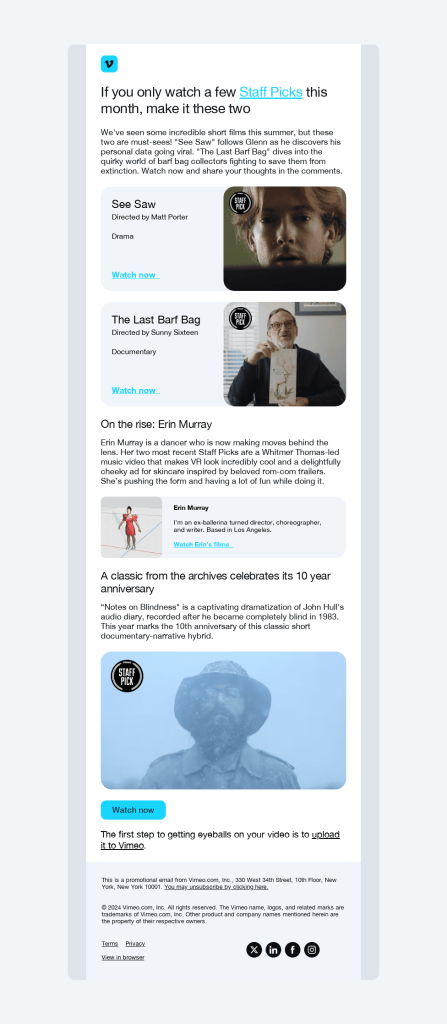
2. Create a Compelling, Mobile-First Design
A great campaign idea means nothing if the email itself breaks on a reader's phone. Over 55% of emails are now opened on mobile devices, so mobile-first design is the baseline.
Here are key principles for modern email design:
- Use a single-column, responsive layout that renders cleanly on any screen size.
- Set a minimum font size of 14–16px for body text, as smaller font sizes will be unreadable on mobile.
- Make CTAs (calls to action) large and thumb-friendly - it should be at least 44px tall.
- Test for dark mode, as around 40% of email users have dark mode enabled. Emails built only for light backgrounds can appear broken or unreadable. That is why, always preview in both modes before sending.
- Keep your design on-brand because generic templates won't resonate with your audience. Your visual identity should be consistent across every touchpoint.
- Use accessible design - add alt text to images, maintain sufficient color contrast, and don't rely on images alone to convey key information (many email clients block images by default).
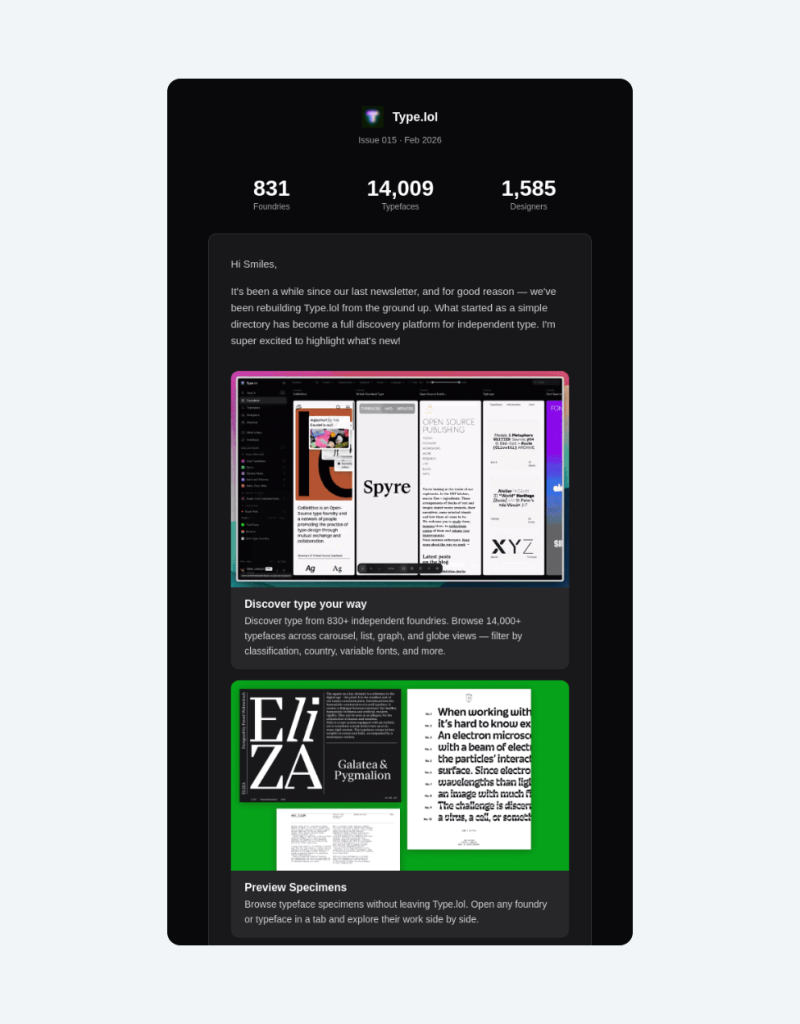
Nowadays, AI-powered design tools, like Elastic Email AI Template Designer, can generate entire email templates from a brief description, dramatically speeding up production, which is especially useful when you're running multiple campaign types simultaneously.
3. Share Blog Updates
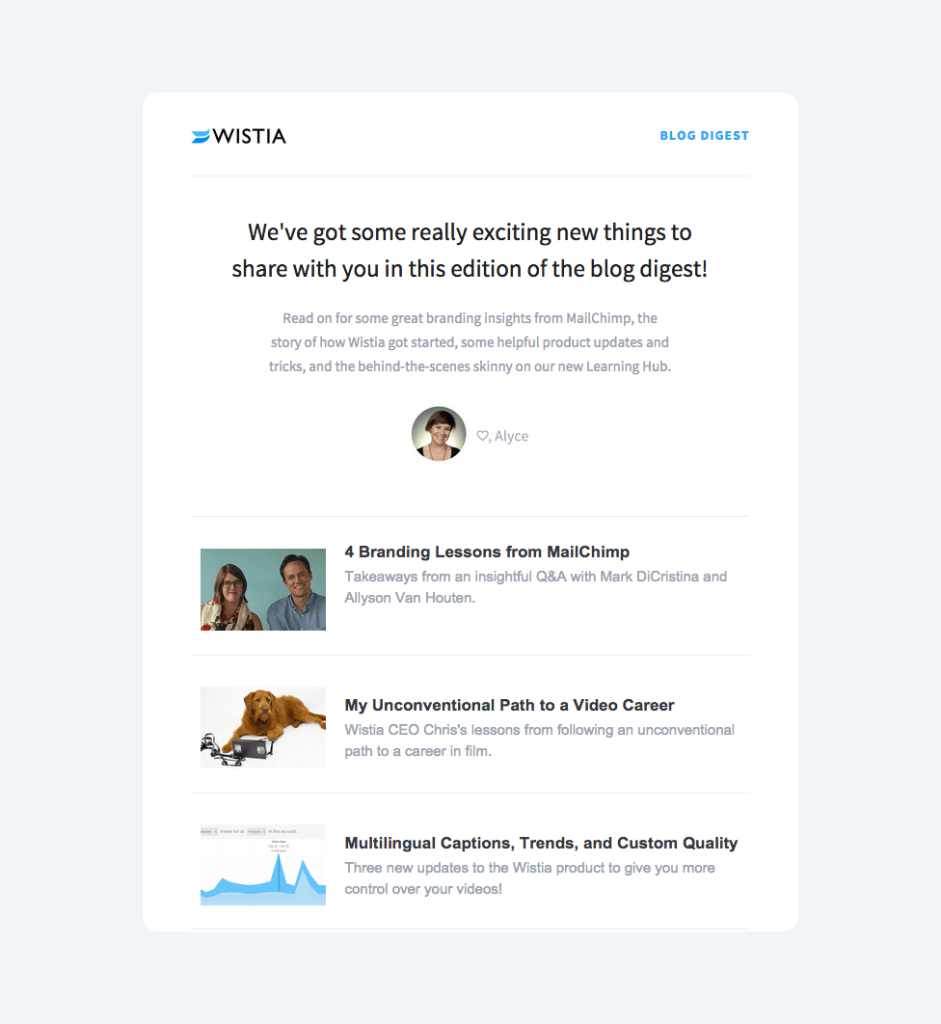
This is one of the most straightforward and consistently effective campaigns you can run. Every time you publish new content, notify your subscribers and bring the post into their inbox.
It’s a great practice, as your subscribers voluntarily signed up to your list, so they want updates from you. Also, it drives qualified traffic to your website because your audience knows your brand, so they aren’t cold visitors. Lastly, promoting your blog posts keeps your newsletter regular without requiring you to produce exclusive email content every time.
Here are some tips for promoting your articles via email well:
- Don't just paste the headline and a link. Write a one- or two-sentence teaser that frames why this article matters to this reader.
- Segment by interest so different subscriber groups receive the articles most relevant to them.
- Use automation to trigger the send as soon as a post goes live.
4. Announce a Product or Service Launch
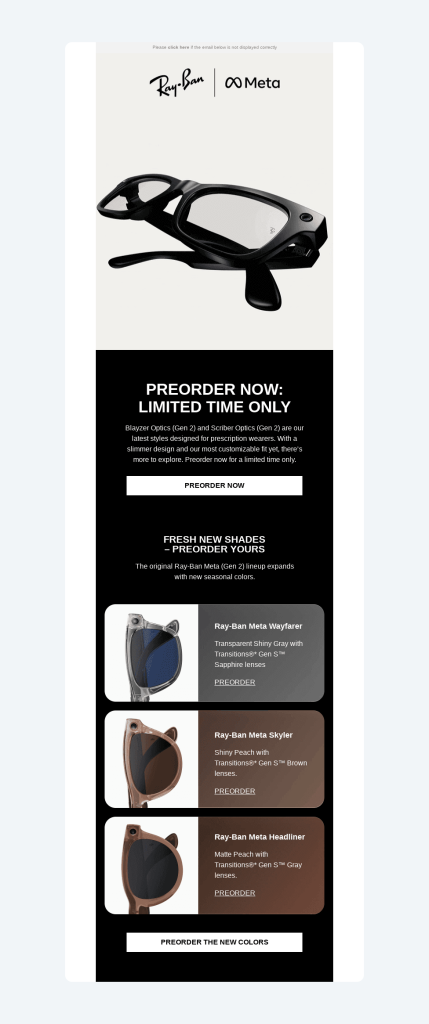
Notifying subscribers about a new product or service keeps them in the loop. If you do it before the public launch, it makes them feel like insiders. That exclusivity is powerful.
Effective approaches include teaser series, in which you build anticipation with 2-3 emails leading up to launch day. You can also offer subscribers exclusive early access to purchase or try the product before anyone else. Another practice is to build a "coming soon” landing page to drive email signups specifically for launch notifications and growing your list in the process.
The combination of exclusivity and direct access is something social media rarely delivers as effectively as email.
5. Follow Up After a Purchase or Action
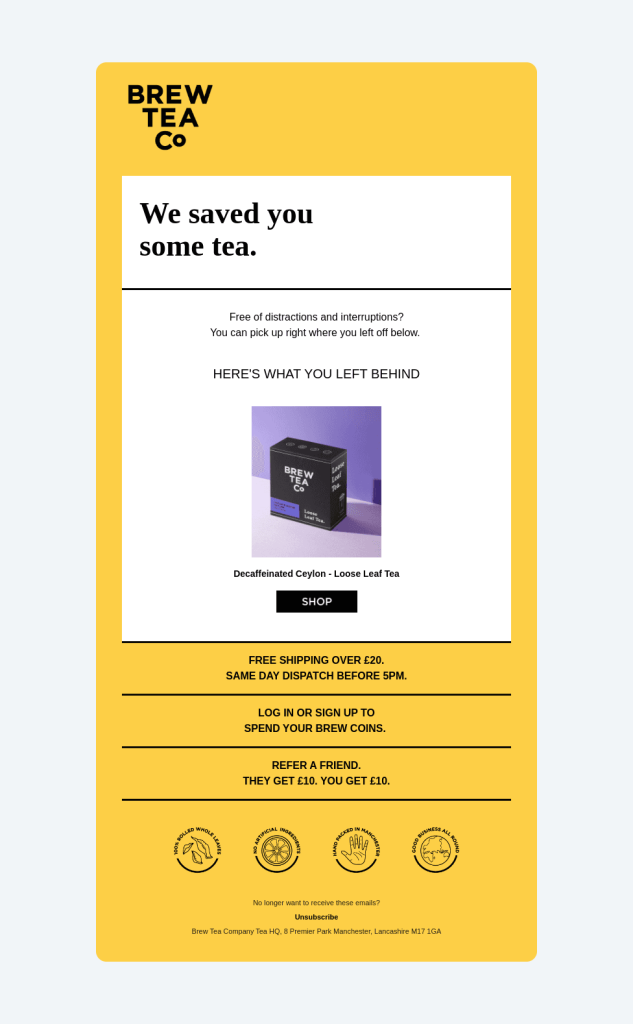
Behavioral follow-up emails, meaning triggered by what a subscriber did rather than sent on a calendar schedule, consistently outperform bulk email campaigns. They also generate more revenue per send than standard promotional campaigns. If you haven’t build such email flows yet, they have the highest ROI you can add to your email marketing strategy.
You can consider some of these key automations to have in your email flow:
- Cart abandonment emails - remind shoppers of items they left behind. A well-timed sequence (sent 1 hour, 24 hours, and 72 hours after abandonment) can recover a meaningful share of lost revenue. Consider adding a modest discount in the final message to close the deal.
- Post-purchase sequences - thank customers, set expectations for delivery, and introduce them to complementary products.
- Onboarding sequences - for SaaS or service businesses, guide new customers through key features or milestones in their first 30 days.
- Course or event follow-ups - after a webinar or online course, send a recap, additional resources, and a next-step offer.
6. Conduct a Survey
A well-crafted survey email is often the most valuable message you'll send, not in revenue terms, but in the intelligence it returns.
Surveys help you understand subscriber interests at a deeper level than click data alone. They also measure satisfaction with your products, content, or service. Survey results are also a goldmine of ideas for new products, topics, or features your audience actually wants. Asking your subscriber questions will allow you to capture any negative sentiments and address them before they reach public review sites.
Keep surveys short (3–5 questions maximum) and make the value exchange clear: tell subscribers why their input matters and what you'll do with it. A small incentive, like a discount, a free resource, early access, significantly increases completion rates.
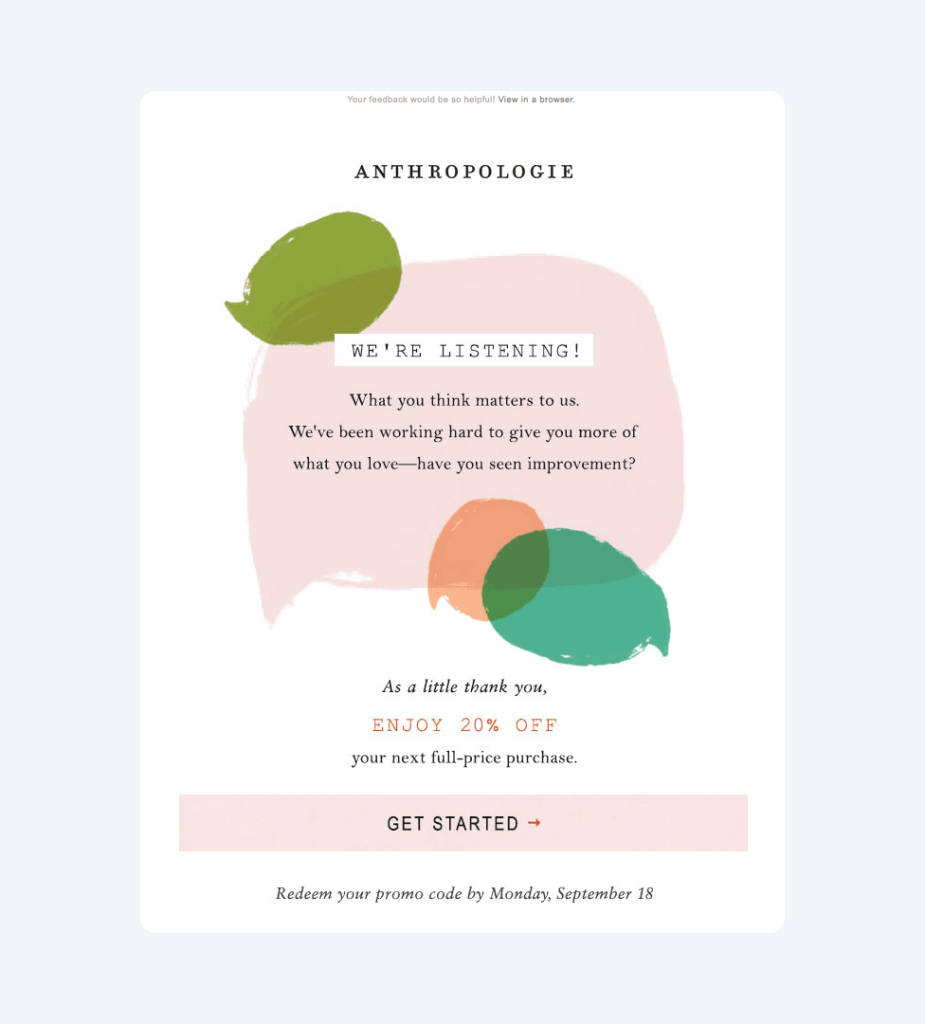
7. Request a Review or Testimonial
Social proof is one of the most persuasive forces in consumer behavior, and email is one of the best channels for collecting it. A targeted review request campaign sent to your most engaged customers can generate a steady stream of reviews on Google Business Profile, your website, or other relevant platforms.
Best practices for requesting a review start with segmenting your audience carefully. Send this only to customers who've had a positive experience. Use purchase history, support ticket resolution, or engagement signals to identify your best advocates. Remember to make the whole process frictionless by linking directly to the review form.
Usually, it’s not easy to encourage people to write a review or testimonial. That is why you should offer them something in return. A discount, bonus content, or a loyalty point top-up increases participation rates significantly.
Reviews are a great promotional resource, so embed reviews on your site. Let your potential customers know that other people are satisfied with your product or service.
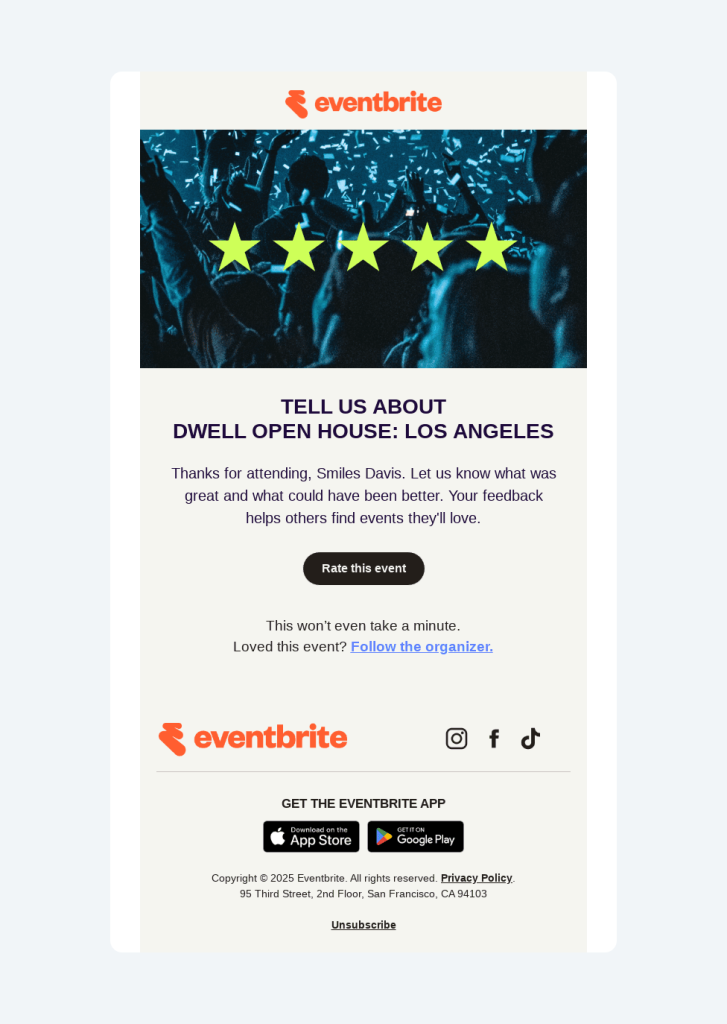
8. Cross-Promote Your Other Channels
Email is an ideal place to introduce subscribers to where else they can find you and deepen their relationship with your brand beyond the inbox.
Include in your campaigns:
- Social profile links with a clear reason to follow (exclusive content, behind-the-scenes, community discussions).
- Social share buttons on content-heavy emails so readers can share articles with their networks.
- Instagram feed blocks showing your latest posts (supported by most modern email builders).
- LinkedIn and YouTube highlight if those are active parts of your content strategy.
The goal isn't to drive people away from email but to give your most engaged subscribers more ways to stay connected.
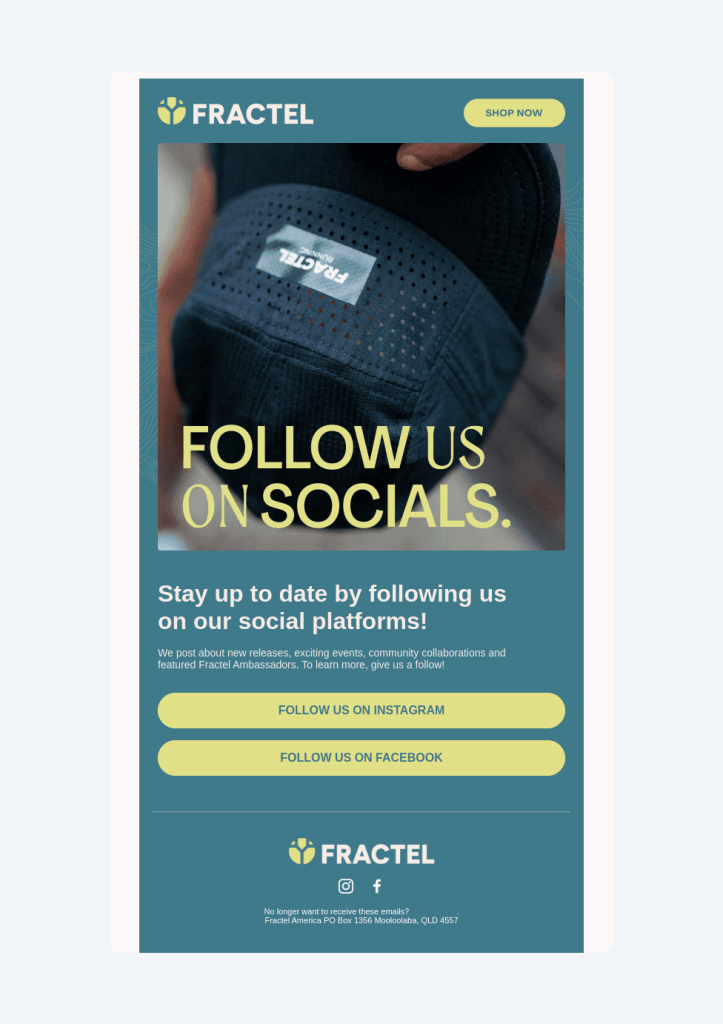
9. Amplify a Specific Social Campaign
Take the previous tip a step further: use email specifically to boost a high-effort social campaign that needs visibility.
You can organize a contest or a giveaway, as email subscribers often have higher intent and conversion rates than social media audiences. You can also promote a live broadcast or event via email. It can be a webinar, Instagram Live, a LinkedIn event, or a session where you create videos to engage your audience. Another option is to send a poll or interactive prompt where email drives participation back to a social thread. Lastly, you can send a hashtag campaign where you invite subscribers to participate and share.
Launch the email campaign before the social content goes live to build anticipation, then send a reminder on the day. This two-stage approach reliably increases participation beyond what organic reach alone would generate.
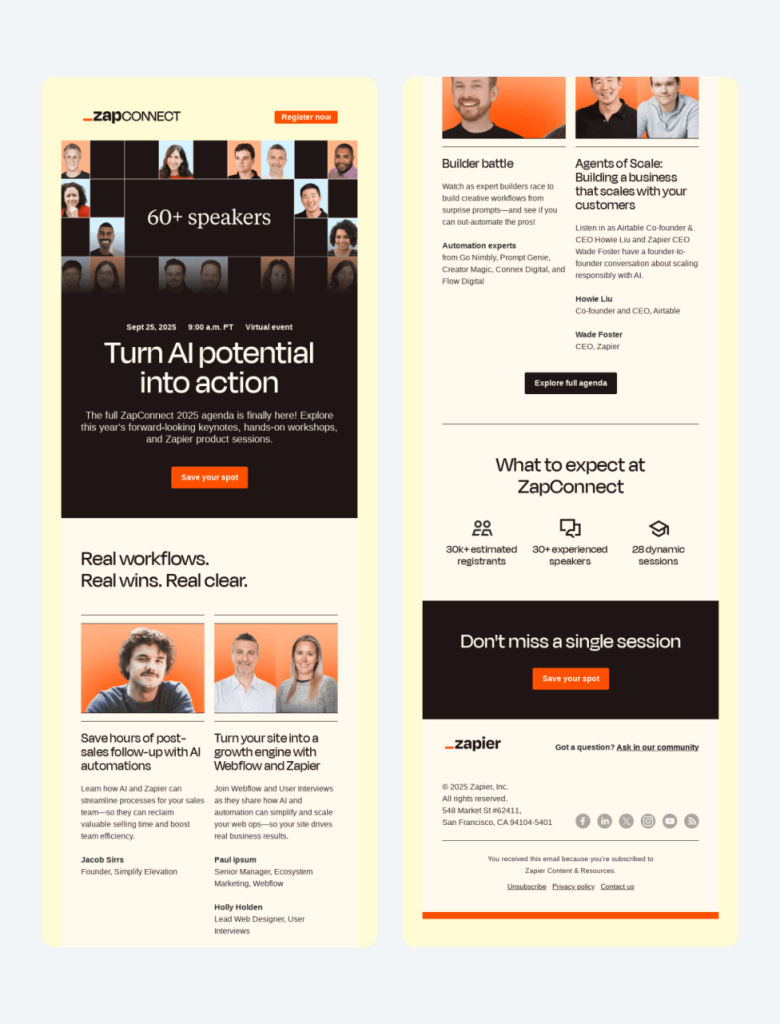
10. Offer a Subscriber-Exclusive Discount or Benefit
Occasional exclusive offers, like discounts, early access, or free upgrades, reinforce the value of being on your list. They remind subscribers that their email address is worth giving you.
Use this campaign type:
- During slow seasons to stimulate demand without discounting publicly.
- As a re-engagement lever for subscribers who haven't converted in a while.
- As a welcome offer in your onboarding sequence for new subscribers.
- To reward loyalty milestones (100th purchase, anniversary of joining your list).
Don't overuse this tactic, though. If every email contains a discount, the exclusivity evaporates. Reserve it for moments where it adds genuine value.
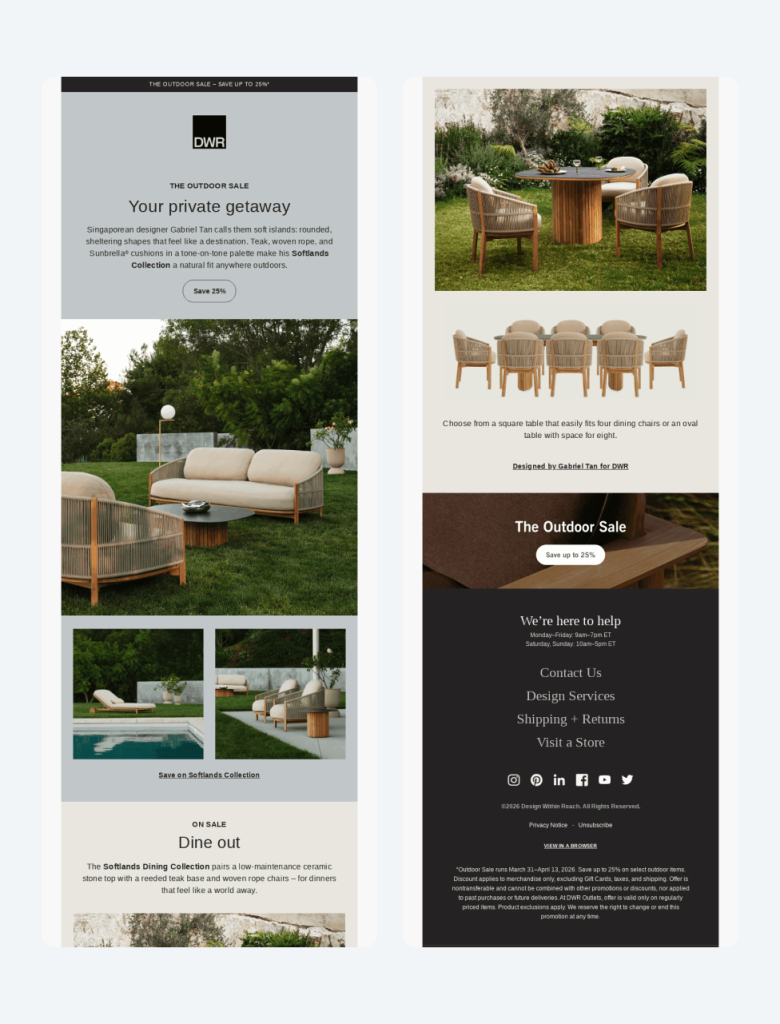
11. Share a Curated Product or Content Selection
A well-curated selection email is a low-effort campaign that performs reliably for both e-commerce brands and content publishers. For example, it can be “our top picks this month," "staff favorites," or "most popular this season".
For this campaign to work, you need to lead with value, not pure promotion. Frame selections around your subscriber’s need, not your desire to sell. Also, add editorial context. A sentence explaining why each item was chosen adds humanity and trust. Additionally, segment by behavior. If you know a subscriber has purchased in a particular category, curate for that interest rather than sending a generic catalog. Remember to use timing wisely. Seasonal curations, like back to school, soft guides, or summer reads, align naturally with subscriber mindset.
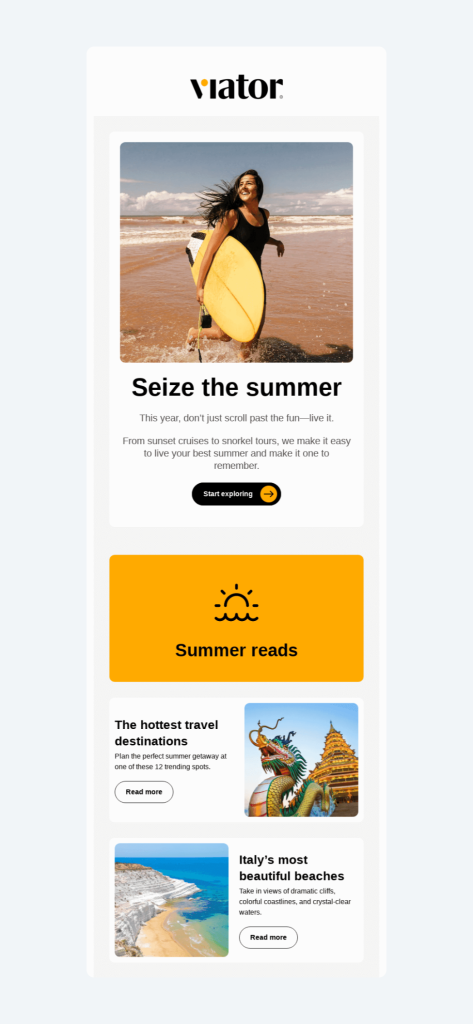
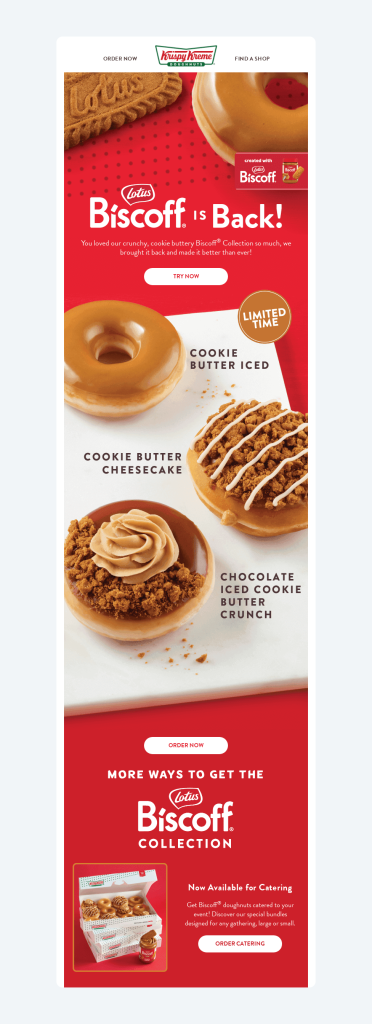
12. Announce a Partnership or Collaboration
Co-marketing with a complementary brand gives both parties access to a new audience while offering subscribers something genuinely valuable, such as a combined product, a joint event, or a bundled offer.
For this to work well:
- Choose partners whose audience shares genuine interests with yours, but isn't identical.
- Coordinate the campaign together - both brands sending simultaneously maximizes impact.
- Be transparent with subscribers. Tell them who your partner is and why you're working together.
- Track results separately so both sides can evaluate the collaboration fairly.
Done right, co-marketing expands your list, increases brand credibility, and creates content that neither party could have produced alone.
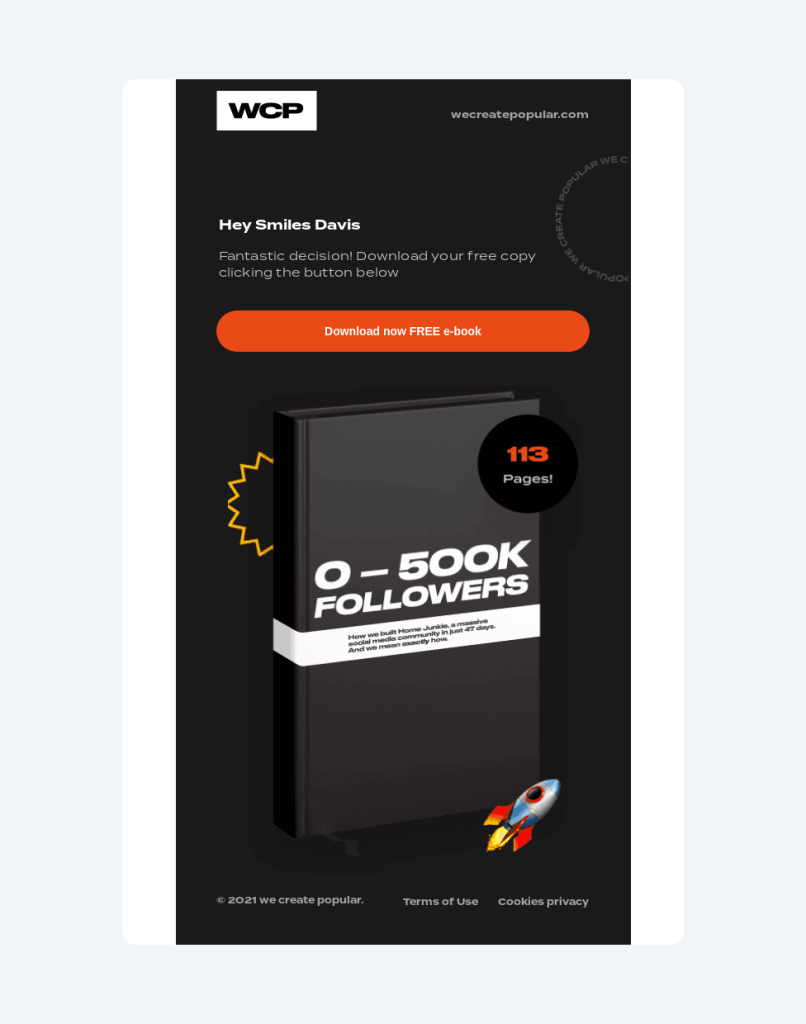
13. Give Something Away
A gift campaign, like a free ebook, template, checklist, mini-course, or tool, is one of the most effective ways to reward subscribers and reinforce the value of staying on your list.
What makes a gift campaign work is the gist that is genuinely useful, not just a sales pitch. It should also be relevant to the subscriber segment receiving it. A gift that matches a subscriber’s interest converts better than a generic giveaway. It would be perfect if this gift is tied to a moment, like an anniversary, a milestone, a seasonal occasion, or just a thank you for being here.Paid newsletters and digital products are a natural evolution of this strategy. If your content consistently delivers value, a subset of subscribers will pay for premium access. This is now a proven business model for creators and niche publishers alike.
14. Send a Content Compilation
A well-produced digest or "best of" email serves two purposes at once: it delivers immediate value to your subscriber and it surfaces older content that remains relevant but may have been missed.
You can organize your content by them rather than by publishing date, as thematic consistency is more engaging than a chronological list. Don’t just include links but write short editorial introductions for each item. If you have enough behavioral data, send different compilations to different interest groups. Lastly, include a mix of formats - articles, videos, tools, or external resources you find genuinely useful. This way, you’ll be a curator of not only yours, but only other’s content. It would show you’re confident enough to promote other brand’s content and will help you build trust.
15. Recover Inactive Leads with a Re-Engagement Campaign
Re-engagement campaigns are often overlooked because it feels uncomfortable to acknowledge that some subscribers have drifted. But a thoughtfully designed recovery sequence can win back 15–20% of inactive subscribers, and the rest gives you cleaner data to work with.
First, define what “inactive subscribers” mean to you and segment them. They can be all leads who haven’t clicked on your emails in 90 days, or those who haven’t purchased anything in 6 months. Think beyond opens as due to Apple's Mail Privacy Protection, click data is more reliable than open data for this purpose.
Once you’ve segmented your inactive leads, send them a direct and honest email. Acknowledge that you haven’t heard from them. Ask if they want to stay subscribed. Remember that humor and warmth work well here. You can also offer them something new - a discount, a new content series, or a product update. If their previous engagement has gone cold, give them a reason to re-engage.
Unfortunately, a single email rarely does the job. Space your attempts 5-7 days apart. After the sequence, move non-responders off your active list. This isn’t failure, but an email list hygiene practice. It protects your sender reputation and deliverability for everyone else.
Conclusion
Don't underestimate the power of a well-planned email marketing campaign. The channel has evolved significantly over the past few years, but its core strength remains unchanged. It still gives you direct, owned access to an audience that chose to hear from you.
The key is knowing that audience well. Segment your list based on real behavior. Produce content that genuinely serves your subscribers. Plan your campaigns with intention rather than sending for its own sake. And keep testing various email elements - subject lines, send times, formats, and CTAs.
The 15 campaign types above give you a strong toolkit to work from. Start with the ones most aligned with where your business is right now, and build from there.
Send transactional email via REST API and SMTP relay built for developers. Real-time logs, subaccounts, and SDKs for JS, PHP, Python, Java, and more.
Enjoying this Content?
You can receive articles like this straight to your inbox.
Sign up for our newsletter and get a dose of email marketing knowledge every month!
FAQ
If you like this article, share it with friends:


Ula Chwesiuk
Ula is a content creator at Elastic Email. She is passionate about marketing, creative writing and language learning. Outside of work, Ula likes to travel, try new recipes and go to concerts.

Eager to put this knowledge to some use?
Try one of our products!


